Best Detangling Brushes for Knot-Free Hair (2026)
Updated 2026 · 10 min read · 8 products reviewed
StrandToolKit is reader-supported. When you buy through links on this page, we may earn an affiliate commission at no extra cost to you.
Knots and tangles are not just a styling inconvenience, they are one of the most common ways hair sustains mechanical damage. Pulling a standard brush through wet, snarled strands can stretch hair past its elastic limit, leading to split ends, breakage, and thinning that looks like loss but is really just hair snapping off at the weakest point. A purpose-built detangling brush is engineered to work with hair's natural movement instead of against it, using flexible bristles or a specific pin pattern to glide through knots rather than rip through them.
According to the American Academy of Dermatology's guidance on preventing hair damage, how hair is brushed matters as much as how often, since repeated tension on the same strands accelerates breakage over time. The right detangling brush depends heavily on hair type: straight hair generally tolerates firmer bristles, while curly and coily textures need wider spacing and more flexibility to avoid disrupting curl pattern. This guide breaks down bristle types, brush shapes, and wet-versus-dry technique so you can match a tool to your texture and detangle with far less breakage.

Wet Brush Detangling Brush, Original Detangler Brush (Sky)
The brush that defined the category, using flexible IntelliFlex bristles to glide through knots without snagging or pulling — works on wet and dry hair for all hair types.
- – Bristles can splay slightly with heavy daily use over time
- – Not suitable as a round brush for blow-drying
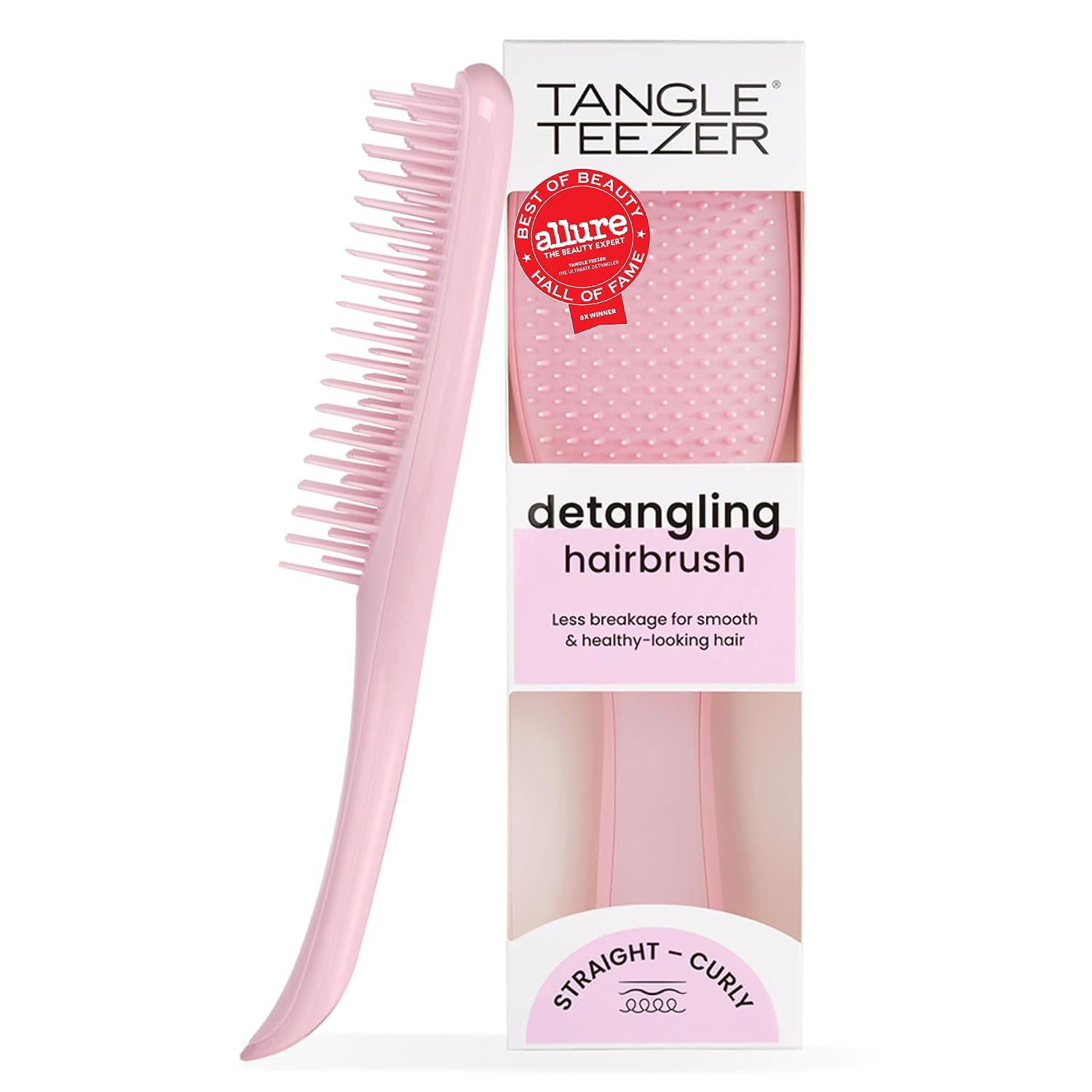
Tangle Teezer Ultimate Detangler — Millennial Pink
A handle-free, ergonomically shaped detangler designed to fit the palm naturally and reduce wrist strain during long sessions.
- – No handle means less leverage on very thick, dense hair
- – Smaller brush head covers less area per stroke
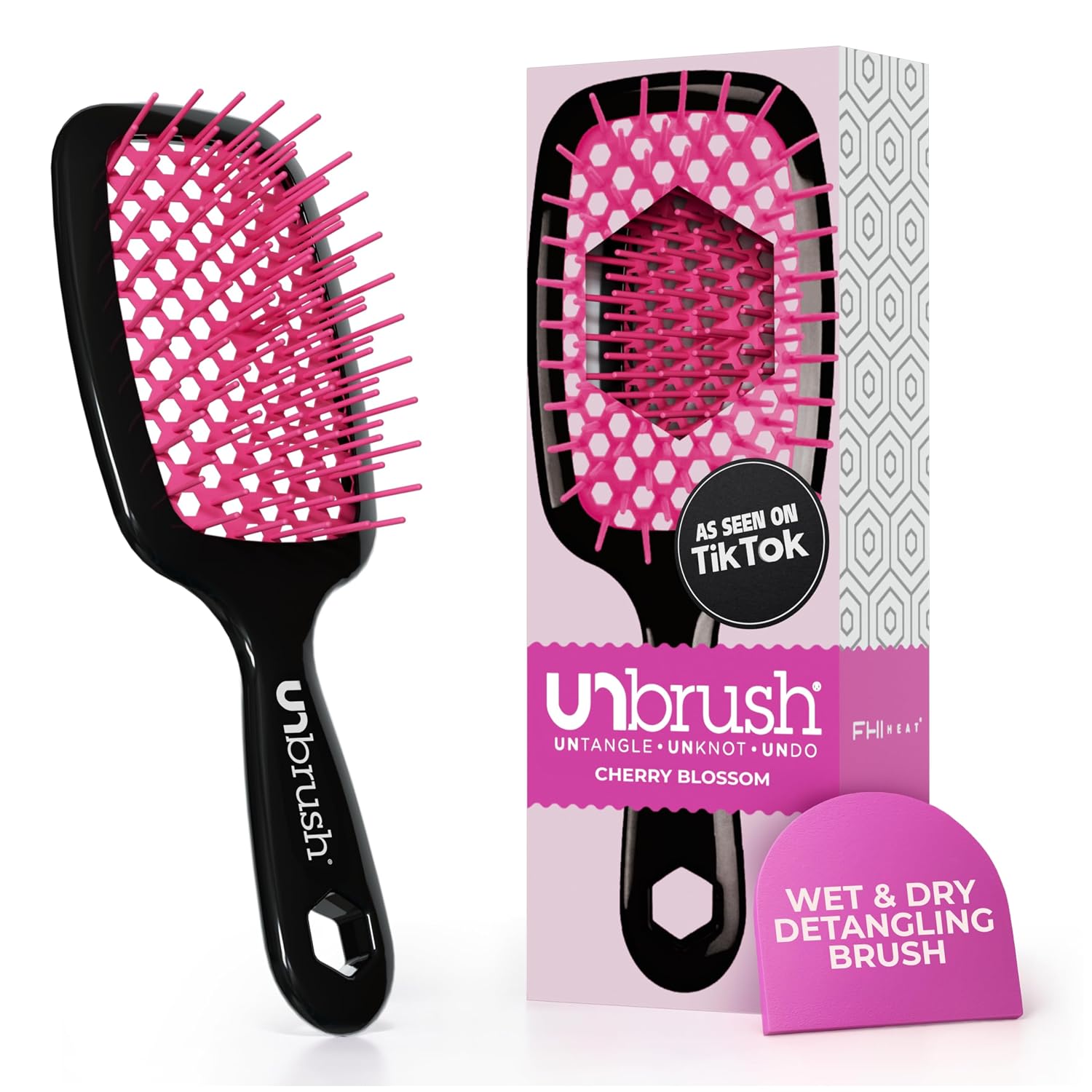
FHI Heat UNbrush Detangling Brush — Cherry Blossom
A wide, dense-bristled detangler built specifically with thick and voluminous hair types in mind for faster full-head detangling.
- – Wider head is less precise on smaller sections
- – Larger size is less travel-friendly than compact brushes
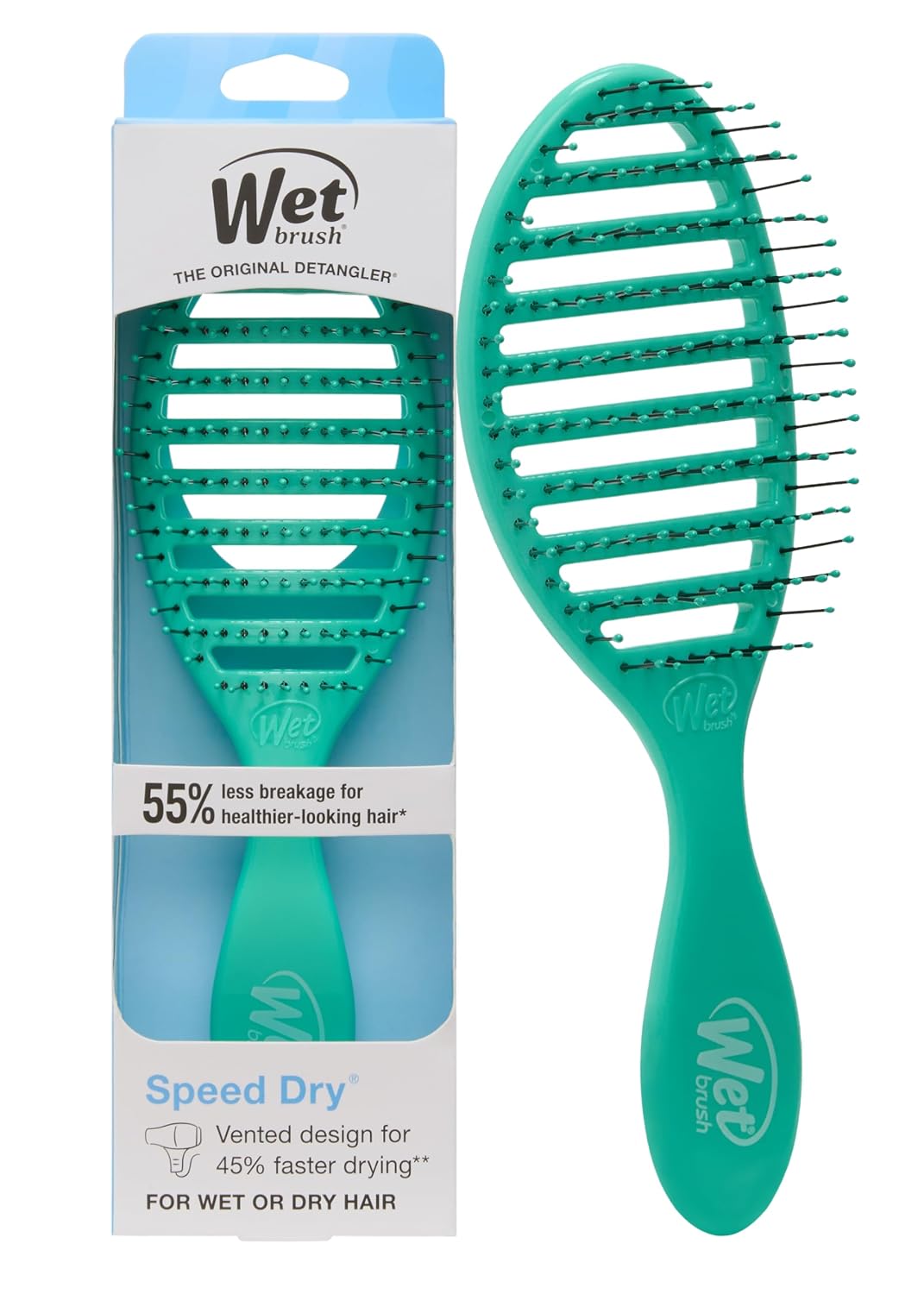
Wet Brush Speed Dry Hair Brush — Aqua
A vented detangling brush built with airflow channels that speed up blow-drying while still detangling gently mid-dry.
- – Vents collect lint and product residue over time
- – Less ideal for purely wet detangling before drying
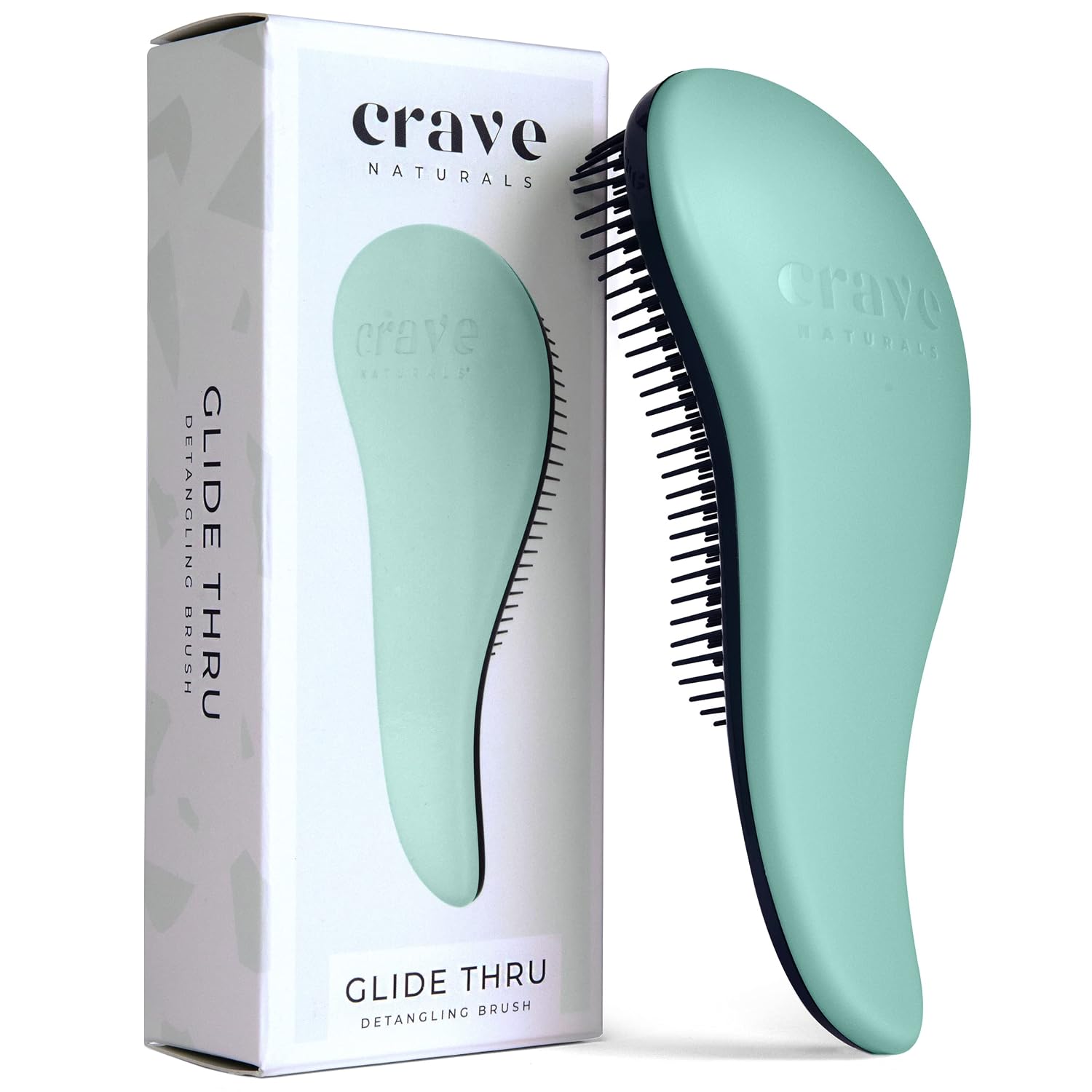
Crave Naturals Glide Thru Detangling Brush — Turquoise
An affordable flexible-bristle detangler suitable for both kids and adults, built around gentle, no-pull glide bristles.
- – Less heavy-duty than brushes built for very thick hair
- – Bristles are softer, requiring more passes on dense knots

Bounce Curl Define EdgeLift Brush — Pink
A curl-defining brush built around closely spaced, flexible bristles meant to separate and define curls and coils without breaking the pattern.
- – Not intended as a primary detangler for very tight knots
- – Smaller brush head means more passes for full-head styling
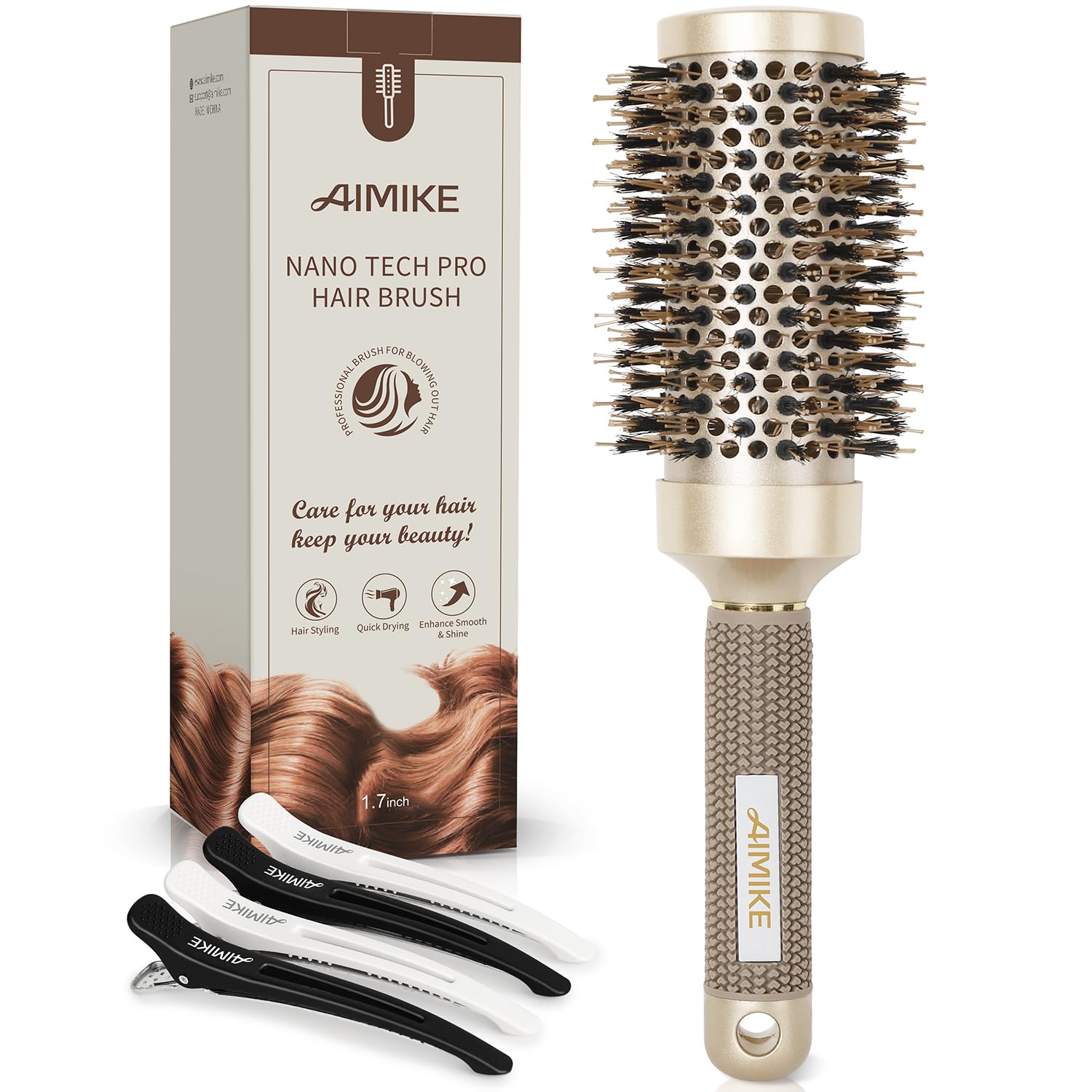
AIMIKE Round Brush with Boar Bristles 2.9 inch
A boar-bristle round brush with a ceramic thermal core, built for smoothing and adding shine during blow-dry styling rather than raw detangling.
- – Less effective on severely knotted, dry hair before pre-detangling
- – Boar bristles require more frequent cleaning
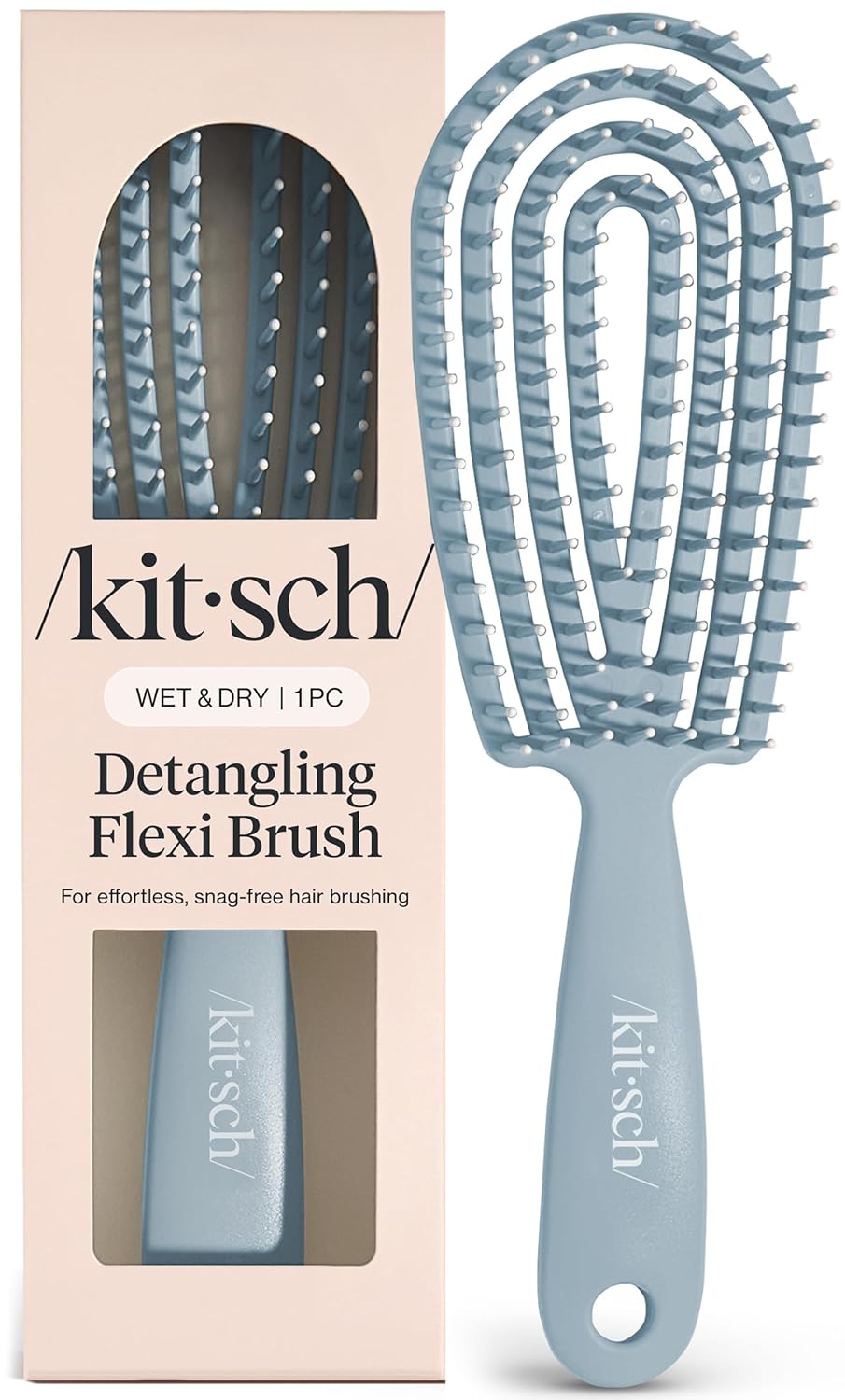
Kitsch Flexi Flow Detangler Brush — Haze Blue
A detangler with a fully bendable frame that flexes with each stroke, defining bouncy curls while gliding through wet or dry strands for the whole family.
- – Flexible frame offers less leverage on extremely dense tangles
- – Playful design reads less premium than salon brushes
Detangling Brush Buying Guide
Bristle Flexibility and Why It Matters
The single most important feature of a detangling brush is how much its bristles flex under tension. Rigid bristles catch on knots and force them tighter as you pull through, which is exactly how breakage happens. Flexible bristles, usually made of soft, slightly springy nylon, bend around a tangle instead of locking onto it, letting the knot loosen gradually rather than snapping under pressure. This is why most detangling brushes look noticeably different from standard paddle brushes: the bristles are often arranged in a flexible base or a fanned, cushioned pattern designed to absorb shock as the brush moves through resistance.
Bristle spacing matters just as much as flexibility. Tightly packed bristles work well on fine, straight hair that tangles minimally, but they tend to get stuck in denser or curlier textures. Wider spacing allows more hair to pass between each bristle at once, which reduces the number of strands caught in any single pass and lowers overall tension on the scalp.
Tip: press a few bristles against your palm before buying. If they feel rigid or barely bend, the brush is likely better suited to smoothing already-detangled hair than working through knots.
Wet Detangling vs. Dry Detangling
Hair is generally more elastic when wet, which can make knots easier to loosen, but wet hair is also more fragile and prone to stretching past its breaking point if pulled too forcefully. Wet detangling tends to work best when paired with a slippery conditioner or detangling spray that helps the brush glide rather than drag. Dry detangling, by contrast, is often gentler for very fine or already fragile hair, since there is less risk of overstretching, though it can be slower going on textures with significant shrinkage or coil.
Many stylists recommend a hybrid approach: loosening the largest knots with fingers while hair is dry, then finishing the process in the shower once conditioner has had time to soften the strands. The National Institute of Environmental Health Sciences' overview of cosmetic and personal care product use also notes that how often a product like conditioner is applied can influence both hair manageability and scalp condition over time, which is a useful reminder that detangling tools and detangling products work best together rather than in isolation.
Brush Shape: Handled vs. Handle-Free
Handled detangling brushes give more leverage and control, which is useful for longer hair or for anyone detangling someone else's hair, such as a parent working through a child's knots. Handle-free, palm-style brushes sit flatter against the head and are often preferred for curly and coily textures, since the lower profile makes it easier to follow the natural curl pattern without forcing hair into an unnatural direction. Some handle-free designs also double as scalp massagers, which can be a pleasant side benefit but should not be the deciding factor over bristle quality.
Detangling Thick or Coily Hair Without Breakage
Thick and coily hair generally has more total knots per section simply because of the density and curl pattern involved, which means rushing the process is the most common cause of breakage. Sectioning hair into smaller, manageable quadrants before brushing reduces the amount of hair any single stroke has to move through, which in turn reduces tension. Starting at the very ends and slowly working upward toward the roots, rather than starting at the roots and pulling down, also prevents knots from being pushed into one another and compacted into a larger, harder tangle.
Tip: apply a leave-in conditioner or detangling spray directly to knotted sections before brushing. The added slip lets bristles pass through coily strands with far less resistance and noticeably less shedding.
Brush Selection by Hair Type
Straight Hair
Bristle type: Firm, closely spaced nylon or boar bristles
Technique: Brush from root to tip in long, smooth strokes to distribute natural oils and maintain shine.
Wavy Hair
Bristle type: Medium-flex bristles with moderate spacing
Technique: Detangle mid-shaft first, then work down to ends and up to roots to avoid flattening wave pattern.
Curly Hair
Bristle type: Wide-set flexible nylon pins or wide-tooth comb
Technique: Finger-detangle large knots first, then brush gently while hair is wet and coated with conditioner.
Coily Hair
Bristle type: Extra-wide flexible loop bristles or seamless comb
Technique: Section hair into quadrants, detangle ends to roots slowly with slip product to minimize tension.
Frequently Asked Questions
Should I detangle my hair wet or dry?
Wet detangling, ideally with conditioner in the hair, generally allows knots to loosen more easily because wet strands have more give. However, wet hair is also more fragile, so a flexible-bristle brush and a gentle hand matter more than ever in the shower. Dry detangling can be a useful first pass for loosening large knots before you add water or product.
How often should I detangle my hair?
Most hair types benefit from detangling once daily, typically before washing or styling, to prevent small knots from compounding into larger ones. Curly and coily textures may only need detangling on wash days, since daily brushing can disrupt curl definition and create unnecessary frizz.
What is the best detangling brush for curly or coily hair?
Look for a brush with wide-set, highly flexible bristles or a wide-tooth seamless comb, both of which glide through dense curl patterns without snagging. Avoid tightly packed or rigid bristles, since they tend to catch on coils and pull rather than loosen them.
How can I detangle my hair without causing breakage?
Work in small sections, start from the ends, and move upward toward the roots rather than brushing straight down from the scalp. Adding a slippery conditioner or detangling spray reduces friction significantly, and choosing a brush with flexible bristles instead of rigid ones lowers the tension placed on each strand.
Do I need a detangling product, or is a brush enough?
A good brush makes a meaningful difference, but pairing it with a leave-in conditioner, detangling spray, or rinse-out conditioner with slip will reduce friction and breakage far more than a brush alone. This combination matters most for thick, curly, or coily hair, where dry friction between strands is the main cause of stubborn knots.
Should kids use a different detangling brush than adults?
Children's scalps tend to be more sensitive, so a brush with softer, more flexible bristles and a lighter touch is generally preferable to the firmer designs adults may tolerate well. Handled brushes also give a parent more control when detangling a child's hair from behind, which can make the process faster and less uncomfortable for everyone involved.
Further Reading
Affiliate Disclosure: StrandToolKit is a participant in the Amazon Services LLC Associates Program. We may earn a commission from qualifying purchases made through links on this page.